The History of Balanced Vocal Registration in Singing
From classical vocal registers to contemporary commercial singing
The history of Balanced Vocal Registration is best understood as the evolution of a singing technique rather than the invention of a single method by one individual.
The central objective is to develop a voice that can move between lower, middle, and upper pitches without an abrupt change in vocal quality, excessive muscular effort, or an unwanted break.
Several related traditions contributed to this approach:
• Classical singing and the historical concept of passaggio.
• Contemporary vocal training and the development of chest, middle, and head voice coordination.
• Seth Riggs’ Speech Level Singing (SLS) approach.
• The subsequent development of contemporary vocal pedagogy by teachers including David Stroud, Jeffrey Skouson, and Greg Enriquez.
The history below distinguishes established historical developments from the more difficult question of exactly who first coined the phrase “Balanced Vocal Registration.”
1. The historical foundations: before modern vocal coaching
The history of Balanced Vocal Registration is best understood as the evolution of a singing technique rather than the invention of a single method by one individual.

13th–18th centuries: the early development of vocal registration
The idea of balancing vocal registers predates modern commercial singing. Early singing traditions recognized that the voice behaved differently at different pitches. Teachers and singers developed practical ways of managing those differences, although their terminology did not correspond exactly to today’s definitions of chest voice, head voice, and mixed voice.
Its goals included:
• A connected vocal line.
• Consistent tone across the range.
• Control of the transition between registers.
• Flexible dynamic expression.
• Clear vowels and sustained resonance.
be equated with modern mixed-voice techniques.
18th–19th centuries: the passaggio
The Italian term passaggio refers to the transition area between vocal registers.
Classical teachers developed exercises to help singers negotiate these transitions without an abrupt change in tone.
This is one of the most important historical connections to modern balanced registration.
The principle is essentially this:
The singer should coordinate the transition rather than force one vocal register to dominate throughout the entire range.
Historical vocal pedagogy contains many competing theories about registration, and there has never been a universally accepted system.
2. Seth Riggs: the development of Speech Level Singing
1940s–1950s: the beginnings
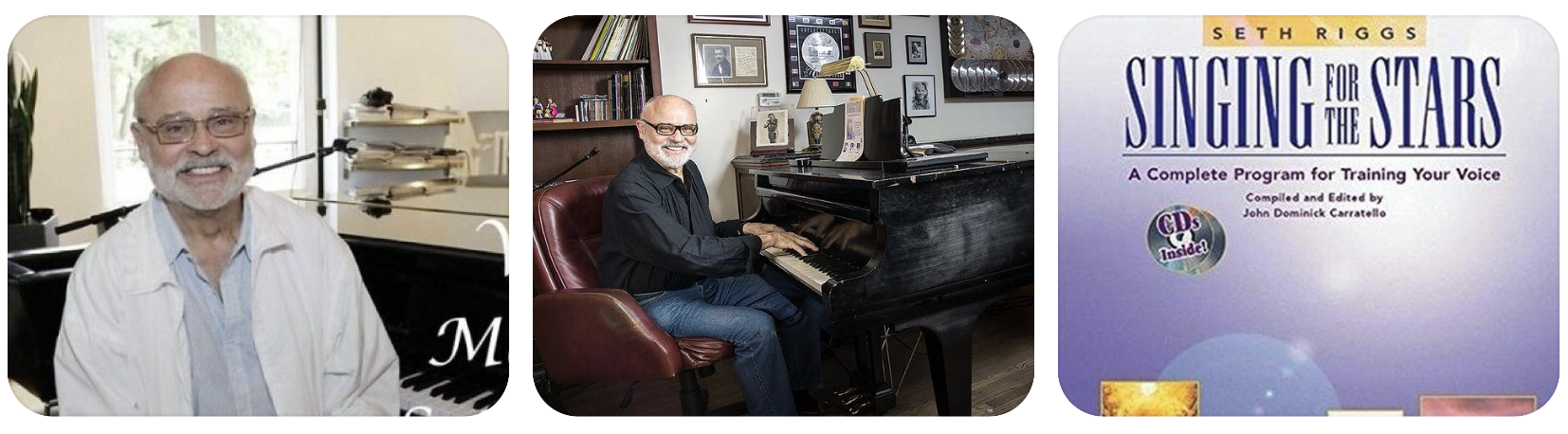
Seth Riggs began developing the principles that would become Speech Level Singing (SLS) during the late 1940s.
Riggs has described his early experiments with vocal technique while serving in the U.S. Navy. He became interested in why some singers could move through their entire range without an obvious break, while others struggled with the transition from chest voice to head voice.
Riggs’ own account places the beginning of his work around 1949, with a more substantial development of the approach during the 1950s.
1960s–1980s: developing the method
Riggs built his teaching career in Los Angeles, working with singers across classical, popular, and commercial music.
His approach was influenced by historical Italian bel canto pedagogy, particularly the writings of Edgar Herbert-Caesari.
• Riggs was concerned with the relationship between:
• The speaking voice and the singing voice.
• The larynx and vocal registration.
• The transition from chest to head voice.
• Vowel modification and vocal tract shaping.
• The avoidance of excessive muscular effort.
The essential idea was that singers should not have to abandon the natural coordination of their speaking voice to sing higher pitches.
This was a major contribution to contemporary commercial vocal pedagogy.
1990s: Speech Level Singing becomes a recognized method
Riggs’ book Singing for the Stars, published in 1992, helped bring his technique to a wider audience.
The SLS approach became particularly influential among pop, R&B, rock, and musical-theater singers.
Riggs also became associated with major recording artists, including Michael Jackson, Stevie Wonder, Whitney Houston, and Ray Charles.
SLS was not simply a collection of exercises. It developed into a teaching system, with a defined vocabulary, training exercises, and a teacher-certification organization.
What did Riggs contribute to balanced registration?
Riggs helped popularize the idea that the singer should maintain a coordinated voice throughout the range rather than pull chest voice upward or allow an uncontrolled break. The term speech level was intended to communicate a relatively natural, unforced relationship between speaking and singing.
His approach was particularly influential because it addressed the needs of commercial singers, who frequently had to move between low, middle, and high pitches while maintaining a recognizable vocal identity.

3. David Stroud: turning SLS into an international teaching system
David Stroud, also known professionally as Dave Stroud, played a major role in making the Riggs approach teachable on a much larger scale.
3. David Stroud: turning SLS into an international teaching system
David Stroud, also known professionally as Dave Stroud, played a major role in making the Riggs approach teachable on a much larger scale.
1980s–1990s: Studing and Developing the Method
Stroud began teaching singing in 1987. He later studied with Seth Riggs and became deeply involved in the development of Speech Level Singing.
He was particularly interested in how the method could be taught consistently to other teachers rather than remaining a technique understood primarily through individual lessons with Riggs.
1995–2000: Formalizing SLS
According to Stroud’s professional biography, he helped develop the formal SLS teaching program, with the teaching platform implemented in 2000.
This was a significant step in the history of balanced registration.
It meant that the technique could be disseminated internationally through a structured teacher-training program. Stroud’s contribution was primarily pedagogical and organizational:
• Establishing a strutured way to teach the technique.
• Developing training and certification standards.
• Helping teachers identify vocal registration problems.
• Expanding the reach of the SLS method.
This helped establish the modern commercial vocal-coaching industry in which registration balance became a central concern.
4. Greg Enriquez: The Bel Canto and Registration-Balance Branch
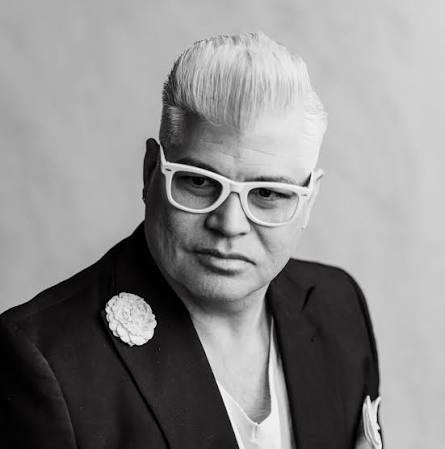
Greg Enriquez’s approach is especially interesting because he explicitly places his work within a historical Italian bel canto tradition.

On his official Balance Vocal Registration Pedagogic Approach page, Enriquez states that he has followed, explored, and emulated an individual application of 17th-, 18th-, and 19th-century Italian bel canto techniques.
He specifically mentions an understanding of Castrati techniques of vocal registration balance and expresses gratitude to Seth Riggs for his vocal direction.
Greg Enriquez
He also acknowledges Richard Miller and Dr. Ingo Titze as important sources of support.
How Enriquez’s approach differs in emphasis
|
Area |
Enriquez’s stated emphasis |
|---|---|
|
Historical tradition |
Italian Bel Canto |
|
Register coordination |
Maintaining balance through vocal passages |
|
Teaching philosophy |
Cause-and-effect exercises |
|
Learning |
Experiential learning rather than relying solely on descriptions |
|
Application |
Opera, pop, rock, jazz, R&B, musical theater, and speech |
|
Influences |
Seth Riggs, Richard Miller, Ingo Titze |
Enriquez’s teaching philosophy is especially focused on the physical experience of producing the desired vocal result. He argues that a singer needs to experience how to produce a sound, rather than simply being told what to do.
Did Enriquez originate the term?
This remains unverified.
His website establishes that he teaches an approach he calls Balance Vocal Registration Pedagogic Approach. It also establishes that he draws on historical Italian bel canto techniques and Seth Riggs’s teaching.
However, it does not establish that he was the first person to use the words balanced vocal registration, nor does it identify a particular person who first coined the term.
The exact formal name may be Enriquez’s own designation for his particular application of the tradition, but that would require further documentary evidence to establish.

5. Jeffrey Skouson: The Teacher-Training Branch
Jeffrey Skouson represents another important development in the SLS lineage.
His published biography states that he:
-
Joined Seth Riggs’s Speech Level Singing organization.
-
Became one of its leading coaches.
-
Rose through the organization to become CEO.
-
Left in 2013 to establish the Institute for Vocal Advancement with other teachers
6. The present-day landscape
Today, the concept of vocal balance appears across several related approaches.
Speech Level Singing (SLS)
The Riggs tradition, with a focus on speech-like vocal coordination, register transitions, and contemporary singing.
Greg Enriquez’s Approach
An individual application of historical bel canto techniques, with an emphasis on registration balance and experiential, cause-and-effect teaching.
Institute for Vocal Advancement (IVA)
The Skouson-led branch, emphasizing vocal balance, teacher education, and coordinated vocal function.
Dave Stroud’s Independent Work
An approach combining vocal instruction, voice science, psychology, and artistic coaching.
7. The overall historical lineage
The broad historical development can be represented as follows:
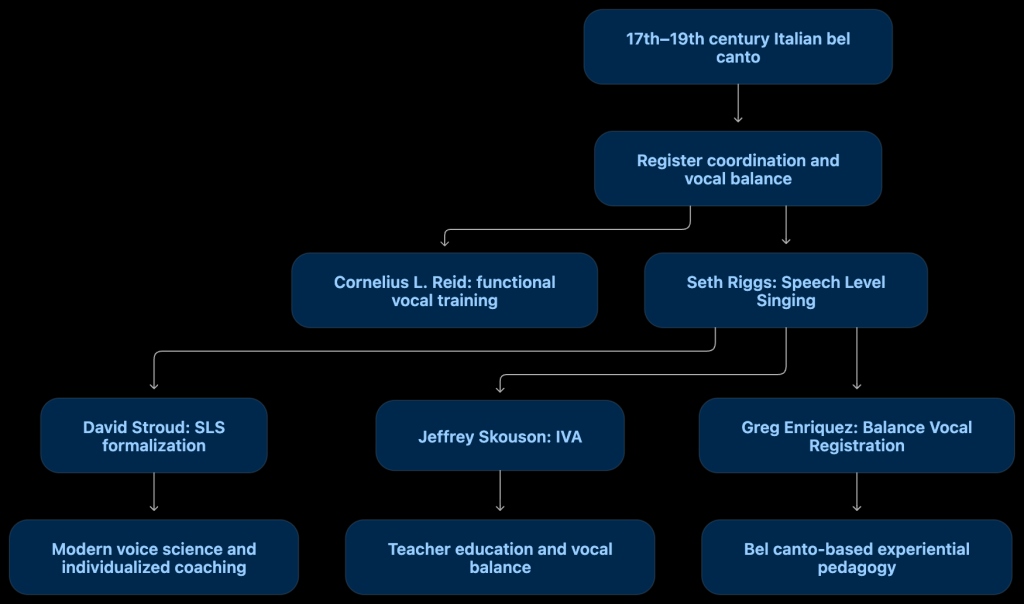
The History of Balanced Registration:
Timeline
•I. 13th–18th Centuries: Historical singing traditions develop ideas about vocal registers and vocal coordination.
•II. 18th–19th Centuries: Bel canto pedagogy emphasizes the passaggio, vocal continuity, and register management.
•III. 1949–1950s: Seth Riggs begins developing the principles that become Speech Level Singing.
•IV. 1960s–1980s: Riggs develops his teaching practice and applies the approach to commercial and classical singers.
•V. 1991: Greg Enriquez becomes Riggs’ Associate, continuing the historical and pedagogical lineage.
•VI. 1992: Riggs publishes Singing for the Stars, helping popularize SLS.
•VII. 1995–2000: David Stroud helps formalize the SLS teaching and certification program.
•VIII. 2013: Jeffrey Skouson and other SLS educators establish the Institute for Vocal Advancement.
•IX. 2010s–2020s: Contemporary vocal pedagogy increasingly integrates registration training with voice science, acoustics, and vocal health.
8. Where Did The Actual Term “Balanced Vocal Registration” Originate?
This is the most difficult historical question.
There are three distinct questions:
1. Who first used the general idea of balanced vocal registration?
2. Who first used the exact phrase “Balanced Vocal Registration”?
3. Who developed a specific contemporary teaching approach using that phrase?
The first question has a long historical answer. The idea of coordinating registers can be traced back centuries.
The second question is not definitively established by the sources I could verify.
The third question is more directly connected to contemporary teachers such as Greg Enriquez, who explicitly describes balanced registration in his published pedagogical material.
Enriquez’s published explanation makes a strong connection between historical bel canto registration principles and his contemporary teaching approach.
However, I would not claim that he was definitively the first person to coin the term without finding an earlier dated publication, interview, or teaching document establishing that fact.
Likewise, I would not claim that Riggs invented the historical principle itself. His major contribution was the development of Speech Level Singing as a modern, recognizable, and widely taught system.
9. Conclusion
The history of Balanced Vocal Registration is a history of continuity and refinement.
The underlying principle — coordinating the voice across its registers — is deeply rooted in the historical tradition of bel canto.
Seth Riggs developed Speech Level Singing as a modern approach to achieving that coordination.
David Stroud helped formalize and disseminate the method through teacher training and certification.
Greg Enriquez explicitly connected contemporary balanced registration with the historical Italian tradition.
Jeffrey Skouson helped develop the institutional and educational infrastructure through which contemporary vocal pedagogy could continue to evolve.
The modern understanding of balanced registration is therefore not simply a new technique. It is an evolving synthesis of historical singing practice, contemporary teaching experience, and modern voice science.
Sources and further reading
– Greg Enriquez — Approach: his published explanation of the historical lineage and pedagogical tradition.
– Greg Enriquez — Career Biography: his professional history and relationship with Seth Riggs.
– Dave Stroud — Official Website: his history of developing the SLS teaching platform.
– Jeffrey Skouson — Biography: his SLS leadership and the founding of IVA.
– Seth Riggs — His CCM Legacy: a scholarly article in the Journal of Singing.
– A Comparative Analysis of Speech Level Singing and Traditional Vocal Training in the United States: a 2011 doctoral dissertation examining SLS and traditional vocal pedagogy.